
Published on August 12, 2026
Bangkok: Talat Noi & Songwat Street Art
Explore Talat Noi and Song Wat Road in Bangkok. Discover street art, historic Chinese communities, local cafés, hidden gems, and experience Bangkok like a local.
Talat Noi, Street Art & Song Wat Road: A Local Guide to Bangkok’s Hidden Charm
If you are looking for a different side of Bangkok away from shopping malls, busy tourist attractions, and crowded streets spend a day exploring Talat Noi, Bangkok’s street art, and Song Wat Road.
This historic riverside neighborhood is one of the best places to experience Bangkok like a local. Here, old Chinese shophouses stand next to creative cafés, colorful street art appears around unexpected corners, and traditional communities continue their everyday lives alongside a new generation of artists and small businesses.
It is the kind of place where you don't need a strict itinerary. The best experience often comes from simply walking, looking around, stopping for a coffee, taking photos, and discovering something unexpected.
Why Visit Talat Noi?
Located on the Chao Phraya River, Talat Noi is one of Bangkok's oldest neighborhoods and has a strong Chinese-Thai heritage.
Walking through the narrow streets, you will see a fascinating mix of old and new Bangkok traditional homes, old mechanic workshops, shrines, cafés, creative spaces, and colorful murals.
What makes Talat Noi special is its atmosphere.
It doesn't feel like a traditional tourist attraction. Instead, you get to see a real neighborhood where people live, work, eat, and run their businesses.
For travelers who want to experience local Bangkok, Talat Noi is a wonderful place to slow down and explore on foot.
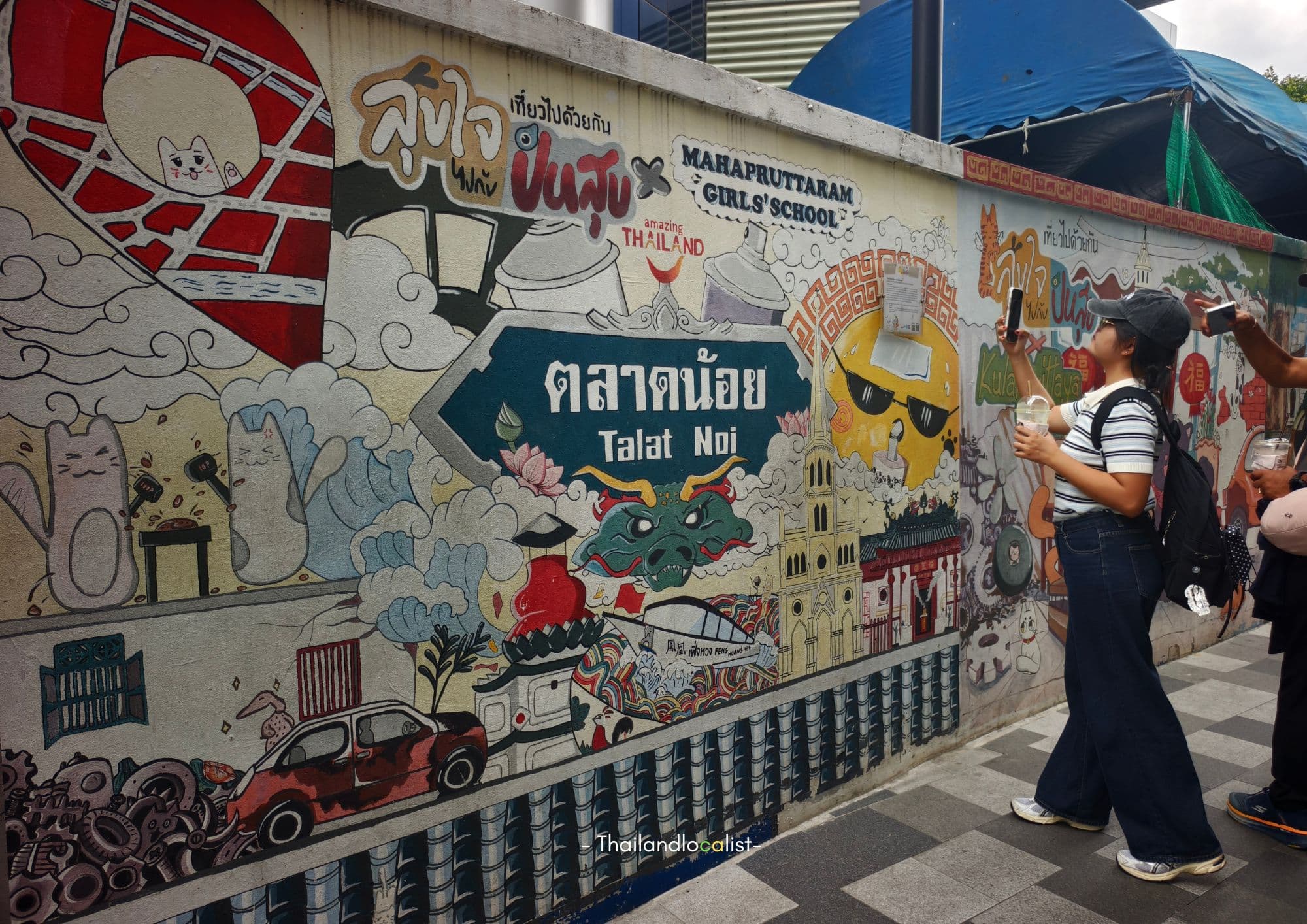
Discover Talat Noi Street Art
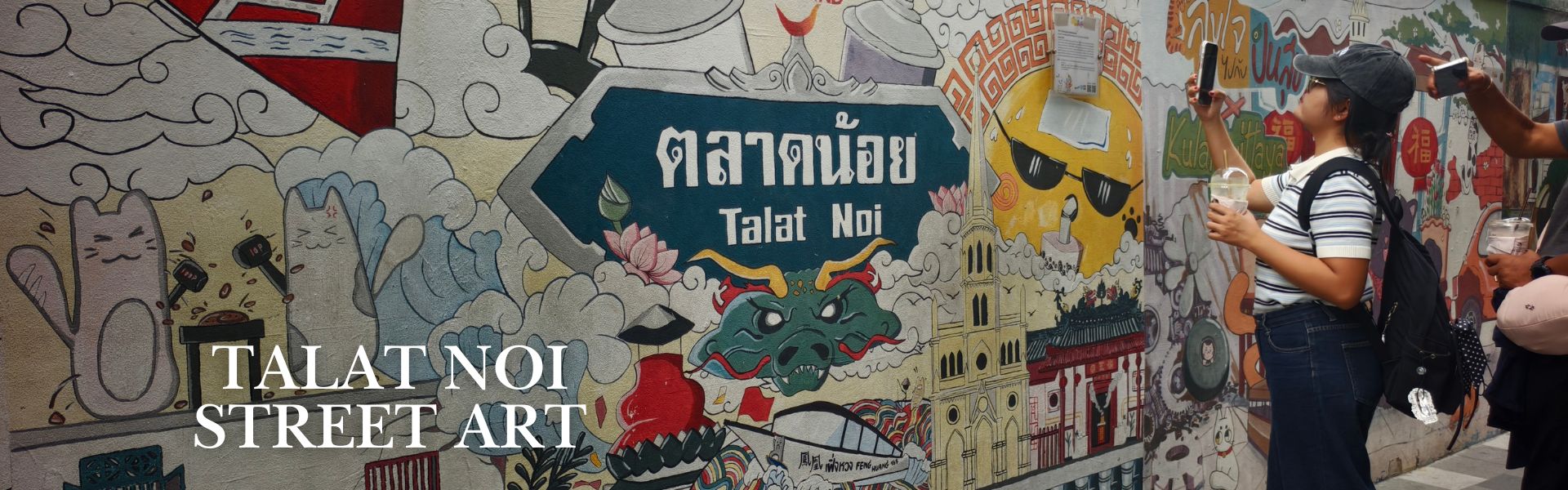
One of the biggest reasons travelers visit Talat Noi today is its street art.
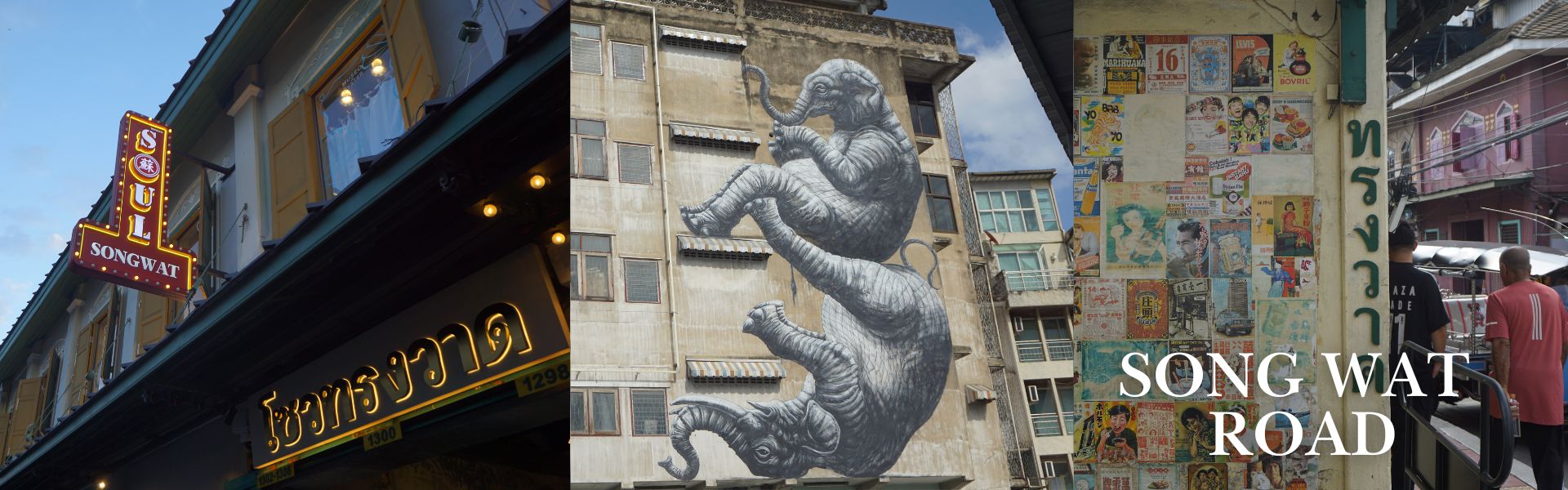
Murals and creative artworks can be found throughout the neighborhood, often painted on old walls and buildings. Some artworks are colorful and playful, while others blend naturally with the historic architecture.
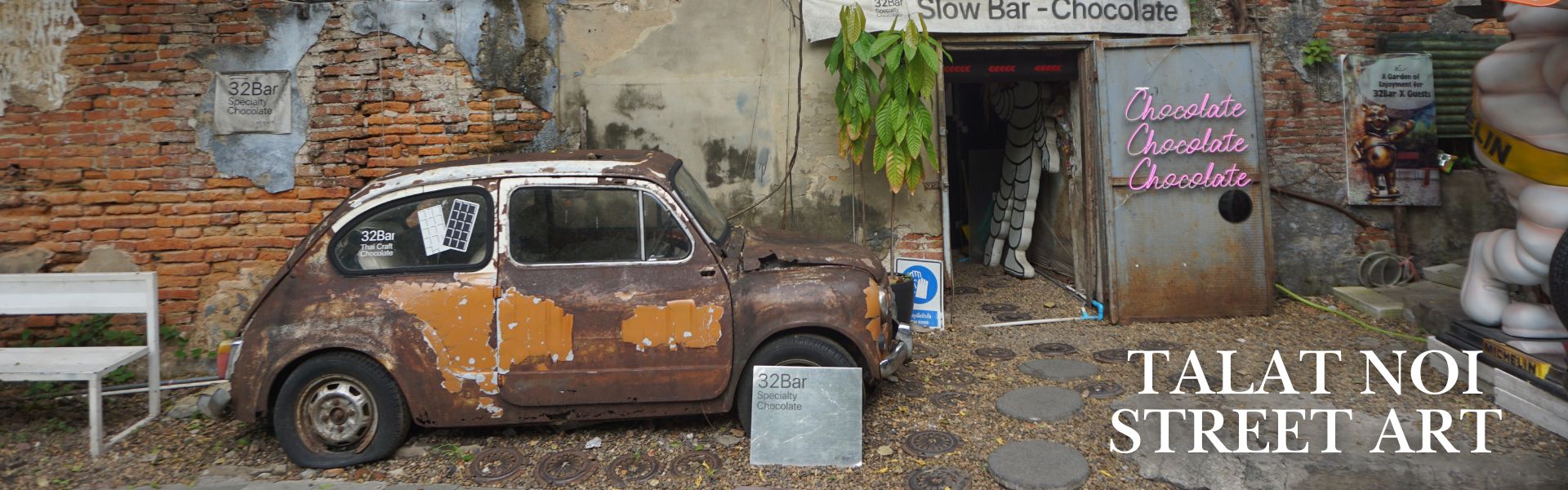
One of the most photographed spots is the famous old Volkswagen Beetle, which has become an iconic photo opportunity in Talat Noi.
But don't stop at the famous photo spots.
Part of the fun is wandering through the small lanes and discovering artwork that you weren't expecting to find.
A Photographer's Dream
Talat Noi is especially popular with photographers and Instagram travelers because almost every corner has character.
You can photograph:
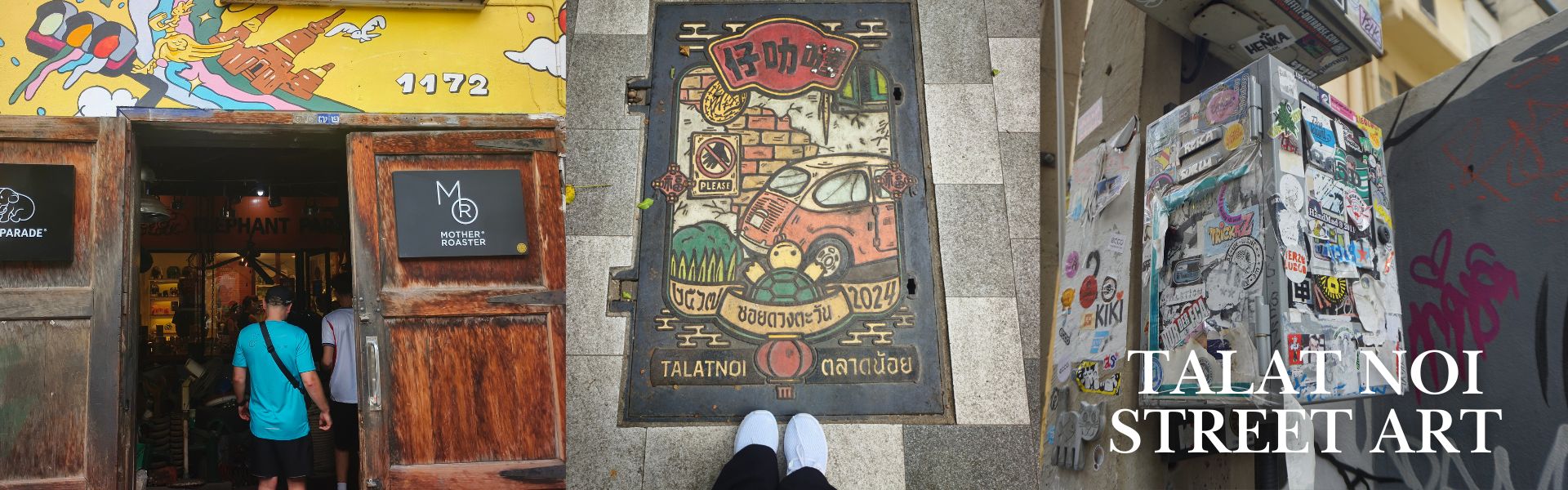
Colorful street art
Old Chinese shophouses
Traditional doors and windows
Vintage cars and workshops
Small shrines
Local cafés
Chao Phraya River views
Interesting textures and old walls
The combination of historic architecture and contemporary street art gives Talat Noi a unique visual identity.
From Talat Noi to Song Wat Road
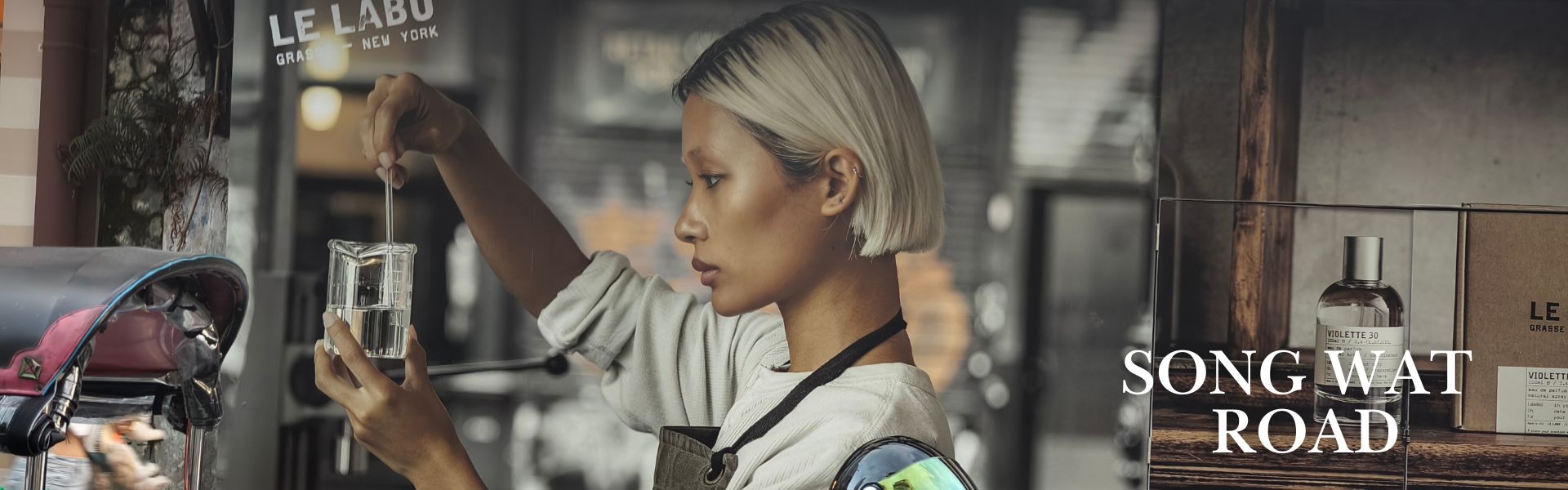
After exploring Talat Noi, continue your walk toward Song Wat Road, another historic neighborhood that has recently become one of Bangkok's most interesting areas for cafés, restaurants, creative businesses, and design lovers.
Song Wat Road runs alongside the old commercial district near the Chao Phraya River.
The area has a completely different feeling from modern Bangkok.
Old buildings have been carefully preserved while new cafés, galleries, restaurants, and independent businesses have moved into the neighborhood.
This creates a fascinating contrast between Bangkok's past and present.
Exploring Song Wat Like a Local
The best way to experience Song Wat is simply to walk.
Take your time and look up.
You will notice old Chinese-style architecture, faded signs, traditional shopfronts, restored buildings, and details that are easy to miss if you are rushing.
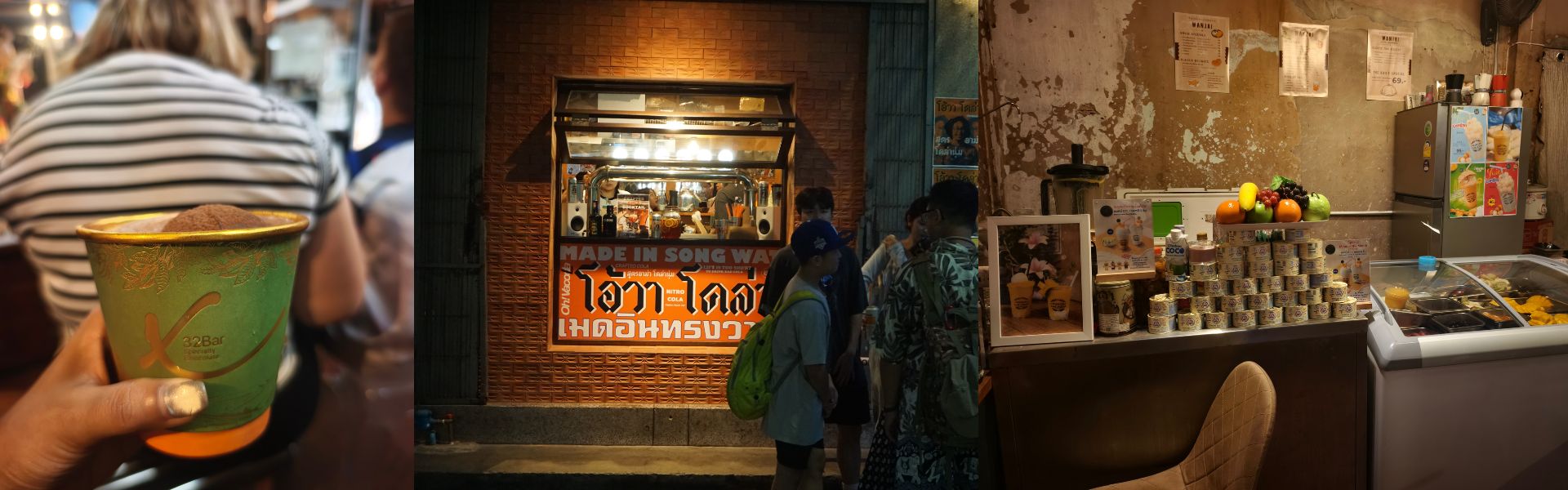
Along the way, stop for a drink or snack at one of the local cafés and enjoy the slower pace of this part of Bangkok.
Song Wat is also a great place to take a break from sightseeing and simply watch the neighborhood go about its daily life.
What Makes This Bangkok Walking Route Special?
The journey from Talat Noi to Song Wat Road is more than just a sightseeing route.
It is a chance to see how Bangkok's historic communities are evolving.
You can experience three different sides of the city in one walk:
Old Bangkok – historic neighborhoods, Chinese heritage, traditional buildings, and local communities.
Creative Bangkok – street art, independent cafés, design spaces, and young entrepreneurs.
Local Bangkok – everyday life, food, small businesses, and people who have called these neighborhoods home for generations.
This combination is what makes the route so memorable.
What to Eat Along the Way
One of the best things about exploring Bangkok on foot is discovering local food.
Talat Noi and the surrounding neighborhoods are known for their Chinese-Thai food culture, traditional snacks, cafés, and small local eateries.
Instead of planning every meal, leave some room for spontaneous discoveries.
Try a traditional snack, grab a Thai iced tea, or stop at a small café when you need a break.
Sometimes the most memorable food experiences are the ones you didn't plan.
Best Time to Visit Talat Noi & Song Wat
Bangkok can be hot, so morning or late afternoon is generally more comfortable for walking.
Early morning is ideal if you want quieter streets and softer light for photography.
Late afternoon is another great option. You can explore the neighborhood, stop for coffee, enjoy the changing atmosphere, and continue toward the riverside as the day cools down.
If you visit during the weekend, expect some areas to be busier, especially around popular cafés and photo spots.
How Long Do You Need?
You can explore the main highlights in around 2–4 hours, depending on how much time you spend taking photos, eating, drinking coffee, and exploring side streets.
If you enjoy photography, local food, history, and discovering hidden corners, you can easily spend half a day here.
A relaxed walking route could look like this:
Talat Noi → Street Art → Historic Neighborhood → Song Wat Road → Local Café → Chao Phraya Riverside
The route is flexible, so you can adapt it to your interests and pace.
Tips for Exploring Talat Noi
Because Talat Noi is a real residential community, remember that people live and work here.
A few simple things can make your visit more respectful:
Keep noise levels low in residential areas.
Ask permission before photographing local people.
Avoid blocking entrances or narrow streets.
Support local cafés and small businesses.
Take your rubbish with you.
Respect temples, shrines, and community spaces.
The goal is not simply to take beautiful photographs, but to experience the neighborhood while respecting the people who make it special.
Is Talat Noi Worth Visiting?
Absolutely.
If you've already visited Bangkok's famous temples and shopping districts and want to discover something more local, Talat Noi and Song Wat Road are excellent choices.
You will find history, street art, food, architecture, photography spots, and local culture all within a walkable area.
Most importantly, you get to experience a side of Bangkok that feels authentic and constantly changing.
There is no need to rush.
Walk slowly.
Look around.
Take a few wrong turns.
Stop for coffee.
Talk to a local.
And let Bangkok surprise you.
Experience Bangkok Like a Local with Thailand Localist
At Thailand Localist, we believe that the best way to discover Thailand is not simply to visit famous attractions, but to experience the places where local life happens.
Our Talat Noi & Song Wat walking experience is designed for travelers who want to explore Bangkok beyond the usual tourist route.
We'll take you through historic communities, discover colorful street art, explore hidden corners, taste local treats, and share the stories behind the streets.
Come walk with us, take photos, discover hidden gems, and experience Bangkok like a local with a local friend.
Ready to discover another side of Bangkok? Join Thailand Localist and let's explore Talat Noi and Song Wat together.
👉Bangkok: Talat Noi & Songwat Street Art Walking Tour.
